⚓ Monograph Overview: The Civil Engineering Cathedrals of Naval Maintenance
Without the dry dock, oceanic naval power could not exist. A wooden or iron ship submerged in seawater suffers relentless biological fouling, hull decay, and damage from underwater groundings. From King Henry VII’s pioneering 1495 dry dock at Portsmouth and Venice’s covered squeri to the monumental Victorian granite graving docks, dry dock civil engineering solved complex hydrostatic challenges of tidal sluices, caisson gates, and drainage pumps.
The operational readiness, tactical speed, and longevity of any maritime fleet depends fundamentally upon an invisible, land-based civil engineering infrastructure: the dry dock (historically termed the graving dock). A ship is an investment of immense capital and national sovereignty, designed to float upon seawater. Yet the very marine environment that sustains a ship is simultaneously engaged in a relentless chemical, mechanical, and biological campaign to destroy its underwater hull.
In warm and temperate oceans, shipworms (Teredo navalis) burrow through wooden hull strakes, reducing mature oak to fragile sponges within months. Simultaneously, colonies of barnacles, mussels, and hydroids encrust the hull, creating immense skin friction that cuts a sailing ship’s speed by more than half and doubles the fuel consumption of a steamship. To inspect, caulk, copper-sheath, repair, or paint an underwater hull, the vessel must be completely removed from the sea and supported upright in a totally dry, stable working environment.
For thousands of years, early mariners performed hull maintenance through the crude, perilous practice of careening (or heaving down)—beaching a ship on a shelving sandbar at high tide, securing heavy tackle from the mastheads to shore capstans, and physically hauling the vessel over onto its side as the tide receded. Careening exposed ships to structural hogging, snapped masts, and catastrophic flooding if a sudden storm caught the vessel on the sand. The invention and evolution of the engineered dry dock transformed hull maintenance into a controlled, safe, and industrial science.
1. The Hydraulic Physics of the Graving Dock
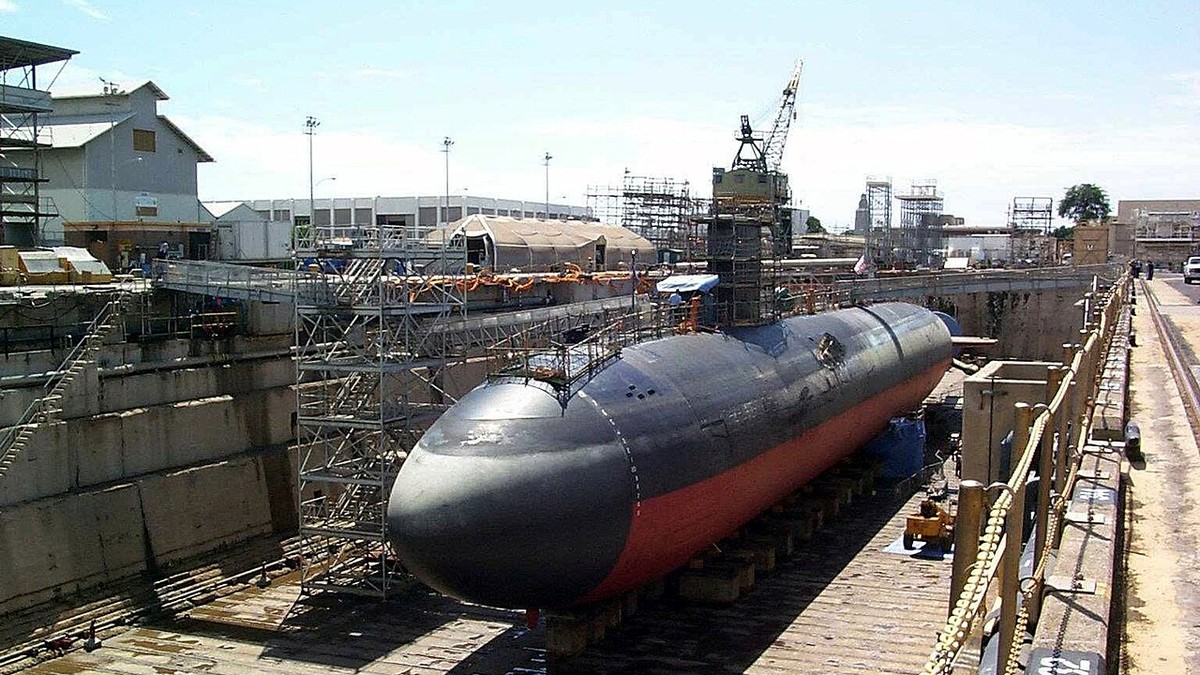
A modern dry dock is fundamentally a massive, reinforced rectangular chamber carved out of the shoreline, separated from the open sea by a movable watertight barrier known as a caisson or lock gate. The civil engineering operation of a dry dock follows a precise hydraulic sequence governed by the laws of buoyancy and hydrostatics:
- Flooding and Entry: Sluice valves in the caisson gate are opened, allowing seawater to fill the empty dock until the interior water level matches the external tidal height. The caisson is then floated out of its masonry grooves, and the ship is maneuvered into the center of the dock by capstan haulers.
- Alignment over Keel Blocks: The ship is aligned precisely along the centerline of the dock, positioned directly above a continuous row of heavy, reinforced oak-capped granite keel blocks fastened to the dock floor.
- Sealing the Caisson: The caisson is positioned back into its masonry sill and ballasted with water until it sinks firmly into the dock entrance groove, creating a watertight seal against the outer sea.
- Dewatering and Settling: Massive hydraulic pumps (or gravity sluices at low tide) evacuate the water. As the water level drops, divers ensure the ship’s keel settles squarely onto the center of the keel blocks. Horizontal wooden shore timbers (struts) are wedged between the ship’s sides and the tiered stone steps (altars) of the dock walls, locking the vessel in an upright, stable position.
| Dry Dock Facility | Year Established | Pioneering Engineering Feature | Construction Material | Historical Significance |
|---|---|---|---|---|
| Portsmouth Dock No. 1 | 1495 (King Henry VII) | World’s first dry dock; manual gravity drainage | Oak timber pilings, clay, and stone rubble | Built for the Mary Rose and Great Harry |
| Venetian Squero / Darsena | 14th Century (Venice) | Covered indoor ship repair dry vaults | Istrian stone foundations with timber roofs | Industrial galley overhaul in protected basins |
| Portsmouth No. 2 Dry Dock | 1802 (Samuel Bentham) | Oldest continuously operating dry dock in the world | Granite ashlar with steam dewatering pumps | Permanent home of Lord Nelson’s HMS Victory |
| Great Western Dock (Bristol) | 1839 (I.K. Brunel) | Custom-cut rock basin with iron lock gates | Pennant sandstone masonry and brick arches | Birthplace and permanent conservation site of SS Great Britain |
| Gladstone Dock (Liverpool) | 1913 | Massive commercial liner dry dock (1,050 ft) | Massive Portland concrete and steel caisson | Engineered to service Olympic-class transatlantic liners |
2. Henry VII and the Birth of the Modern Dry Dock at Portsmouth (1495)
The dawn of modern dry dock civil engineering occurred in the Kingdom of England under King Henry VII. In 1495, determined to provide a permanent, protected shipyard for his burgeoning royal navy, the King ordered the construction of a dedicated dry dock at Portsmouth—the world’s first dry dock since antiquity, and the oldest documented in modern naval history.
Engineered under the supervision of Master Shipwright Robert Brigandine, the 1495 Portsmouth dock was constructed on the marshy shores of Portsmouth Harbour. Excavated entirely by hundreds of laborers using wooden shovels and wheelbarrows, the dock walls were constructed from oak timber pilings driven deep into the mud, lined with heavy clay puddling to prevent water seepage.
The Dual-Gate Timber Pier System
The primary hydraulic challenge facing Brigandine was creating a watertight gate capable of withstanding the fourteen-foot tidal range of the Solent without modern pumping machinery. Brigandine engineered an ingenious double-walled timber floodgate system.
Once a warship—such as the Sovereign or the Regent—was floated into the basin at high tide, the wooden floodgates were closed. The void between the inner and outer gates was then packed solid with hundreds of tons of impermeable blue clay, horse manure, and gravel. As the tide fell, water drained out by gravity through low-level timber culverts. Once the tide was fully out, internal sluices were plugged, and the remaining water was evacuated by hundreds of men operating manual treadwheels, bucket chains, and primitive chain pumps. To release the ship months later, laborers dug out the clay barrier at low tide, allowing the returning flood tide to float the vessel free.
3. Samuel Bentham and the Portsmouth Industrial Revolution
Three centuries after Henry VII, the expansion of the British Royal Navy during the Napoleonic Wars demanded a complete industrialization of dry dock engineering. Between 1795 and 1815, Inspector General of Naval Works Sir Samuel Bentham (brother of philosopher Jeremy Bentham) transformed Portsmouth Dockyard into the most advanced industrial engineering center on Earth.
Bentham replaced timber-lined docks with deep, monolithic granite ashlar graving docks (epitomized by Portsmouth No. 2 and No. 3 Dry Docks). The walls were constructed as tiered stone steps (altars), which served two essential functions: they provided structural counter-forts resisting external soil pressure, and gave dockwrights stable staircases to position timber shores against the ship’s hull at any level.
The Steam Drainage Engine and Inverted Arch Sills
Bentham eliminated manual pumping by installing a massive Boulton & Watt steam engine. Operating reciprocating lift pumps, this industrial steam engine could dewater an entire dry dock containing over 20,000 tons of seawater in less than two hours—a process that previously consumed 200 men for an entire day.
Furthermore, Bentham solved the structural problem of dock floor blowouts. Under high external tide, the upward hydrostatic pressure of groundwater beneath the dock floor threatened to push the stone slabs upward. Bentham engineered the dock floor as an inverted masonry arch: the downward curvature of the granite blocks wedged them together under upward hydrostatic pressure, using the groundwater’s own force to lock the stones into an unbreakable arch.
⚓ Civil Engineering Invention: The Floating Ship Caisson (1798)
In 1798, Samuel Bentham invented the floating boat-caisson to replace swinging lock gates. Built like a hollow iron ship with sloping ends, the caisson was floated into position across the dock mouth, and seawater was let into its internal tanks. The caisson sank into granite V-shaped grooves in the dock sill, using the external sea pressure to wedge its rubber seals into a flawless, watertight barrier.
4. Venice and the Mediterranean Indoor Squero Tradition
While Atlantic shipyards developed open-air tidal dry docks to exploit the rise and fall of the tide, the Mediterranean Sea possesses virtually zero tidal range (rarely exceeding one or two feet). Mediterranean shipbuilders could not rely upon falling tides to drain dock basins.
In response, the Venetian Arsenale developed the covered dry dock vault (volto or squero). The Arsenale incorporated dozens of parallel brick-vaulted dry sheds opening directly onto interior water basins. Galleys were hauled out of the water up sloping stone ramps using massive dual-spindle windlasses and tallow-greased wooden rollers.
Once hauled inside the volto, ships were sheltered from the blistering Mediterranean summer sun (which dried and cracked oak hull strakes) and winter rains (which induced fungal dry rot). Here, in complete climate-controlled security, Venetian Arsenalotti could completely strip, re-caulk, re-rig, and paint war galleys with industrial efficiency.
5. The Evolution into Modern Floating Docks and Heritage Conservation
The twentieth century brought two further evolutions in dry dock civil engineering: the floating dry dock and the mega-graving dock. Floating dry docks—submersible steel pontoon structures that submerge by flooding ballast tanks, slide beneath a damaged ship, and deballast with compressed air to lift the vessel completely out of the water—allowed naval fleets to maintain forward repair bases thousands of miles from domestic shipyards (such as the US Navy’s legendary ABSD floating docks in the Pacific during World War II).
In the twenty-first century, historic dry docks have taken on an extraordinary cultural and conservation mission. They have transformed from industrial repair yards into permanent, living dry berths for the world’s most treasured historic ships. Lord Nelson’s flagship HMS Victory rests in Portsmouth No. 2 Dry Dock; the Tudor warship Mary Rose stands enclosed in Portsmouth No. 3 Dry Dock; and Isambard Kingdom Brunel’s SS Great Britain resides permanently in the Great Western Dry Dock in Bristol.
These ancient stone basins, carved out of granite, limestone, and oak by generations of civil engineers, remain the sacred dry ground upon which the greatest wooden and iron ships in human history were born, sustained, and preserved for eternity.
6. Hydrodynamic Keel Block Engineering and Load-Distribution Physics
The most hazardous moment in the life of a dry dock occurs during the final phase of dewatering, when a 5,000-ton or 10,000-ton warship ceases to be supported by water buoyancy and transfers its entire deadweight onto the dry dock floor. If the ship’s keel touches the blocks unevenly, the concentrated load can crush keel baulks, buckle the ship’s bottom framing, or overturn the entire vessel.
Civil engineers designed keel blocks with multi-layered composite materials: massive granite ashlar foundation piers capped with seasoned English oak baulks, topped by sacrificial soft pine caps. The soft pine crushed elastically by an inch under the ship’s weight, compensating for slight variations in the keel and distributing the multi-ton load smoothly across hundreds of linear feet. Modern dry docks incorporate motorized sliding bilge blocks positioned under water by computerized winches before the dock is completely dry.
| Keel Block Layer | Material Specification | Mechanical Function | Load-Bearing Capacity |
|---|---|---|---|
| Base Foundation Pier | Solid Granite / Heavy Cast Iron | Rigid load transfer to dock floor | Exceeds 100 tons per square foot |
| Hardwood Cushion | Dense English Oak / Teak baulk | Absorbs concentrated downward thrust | High compressive strength without splitting |
| Sacrificial Cap Block | Soft Scots Pine (replaceable) | Crushes elastically to mold to ship keel | Equalizes dynamic point loads across keel length |
7. Victorian Pump Engineering and Centrifugal Drainage Innovations
During the latter half of the nineteenth century, the scale of dry dock dewatering was revolutionized by the development of the steam-driven centrifugal pump, pioneered by British civil engineers John Gwynne and James Simpson. Unlike early reciprocating piston pumps that suffered from valve clogging when pumping muddy harbor water, centrifugal pumps utilized high-speed rotating impellers that accelerated water continuously without valves.
Installed in massive pumphouses alongside Victorian graving docks—such as the Canada and Langton Docks at Liverpool—these giant steam centrifugal pumps could evacuate over 100,000 tons of seawater in less than ninety minutes. This rapid dewatering capability minimized ship downtime, allowing commercial steamship liners to enter dry dock on morning high tide, complete propeller replacement and hull antifouling painting during the day, and float out on the evening tide, maximizing operational profitability across global shipping lines.