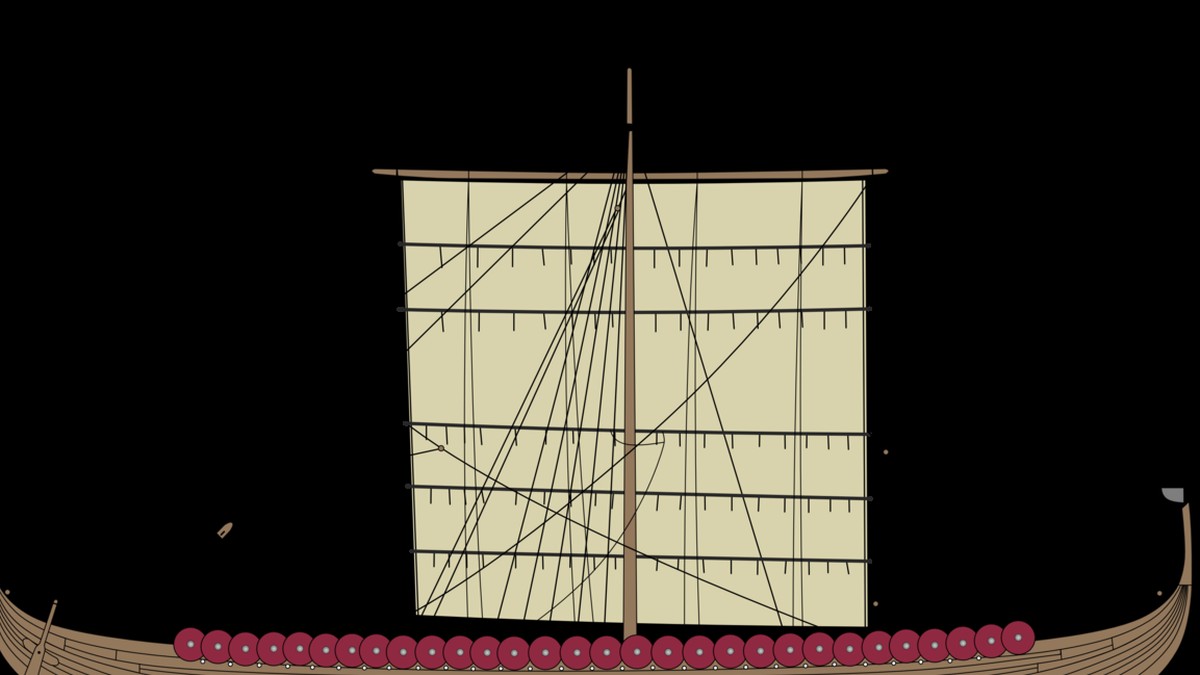
⚓ Monograph Overview: The Great Architectural Divide of European Shipbuilding
For centuries, European maritime culture was divided into two distinct construction philosophies: Northern European clinker (lapstrake) building and Mediterranean carvel (edge-to-edge frame-first) construction. The transition from light, flexible Viking longships and cogs to massive, multi-decked carvel carracks and galleons between 1400 and 1550 transformed naval architecture, enabling transatlantic exploration and the deployment of heavy broadside artillery.
The structural evolution of the wooden sea-going ship is among the most profound engineering achievements in human history. Every culture that ventured onto open water had to solve a fundamental physical dilemma: how to create a vessel possessing sufficient longitudinal flexibility to ride over oceanic swells without breaking apart, while maintaining absolute transverse rigidity to prevent hydrostatic water pressure from bursting its seams. In medieval Europe, this challenge gave rise to two fiercely competing and geographically distinct shipbuilding paradigms: Northern European clinker (lapstrake) building and Mediterranean carvel (flush-planked) construction.
For more than five centuries, the stormy seas of the Baltic, North Sea, and English Channel were dominated by clinker vessels—epitomized by the legendary Viking longships (drakkar) and the Hanseatic cargo cogs. In contrast, the calmer, saline waters of the Mediterranean favored carvel traditions inherited from classical Greco-Roman and Byzantine shipwrights. However, as trade expanded beyond regional basins in the fifteenth century and naval combat demanded the mounting of heavy cast-bronze artillery, the inherent physical limitations of clinker construction triggered a continent-wide technological revolution.
The fusion of Mediterranean carvel hull framing with Northern European multi-masted square sail plans gave birth to the carrack (nau) and the galleon—the supreme instruments of oceanic power that enabled Vasco da Gama to round the Cape of Good Hope, Christopher Columbus to cross the Atlantic, and Ferdinand Magellan to circumnavigate the globe.
1. Clinker (Lapstrake) Construction: Shell-First Flexibility
The clinker tradition, whose roots date back to the Scandinavian Bronze Age and find their archaeological perfection in the ninth-century Oseberg and Gokstad ships, was a shell-first construction method. In clinker building, the outer skin (shell) of the ship was constructed first, establishing the hull form and providing the primary structural strength before any internal ribs were inserted.
Construction began by laying down a solid oak keel, to which the stem and stern posts were scarphed. Shipwrights then attached the garboard strakes (the first row of hull planks alongside the keel) and built upward, plank by plank. Crucially, each longitudinal wooden plank overlapped the upper edge of the plank beneath it by approximately one to two inches. These overlapping edges were clamped tightly together and secured with thousands of soft iron rivets (clench nails) driven through the wood from the outside and clenched over diamond-shaped iron washers (roves) on the interior.
The Hydrodynamic Genius of the Viking Hull
Only after the outer overlapping shell was completed up to the gunwales did the shipwright insert internal transverse ribs (frames). In Viking longships, these light pine or willow ribs were not bolted rigidly to the planks; instead, they were tied or lashed to carved wooden cleats on the inside of the planks using flexible spruce roots or rawhide cords.
The result was an extraordinarily lightweight, elastic hull. When sailing through heavy North Atlantic gale swells, a Viking ship did not resist the waves with brute rigidity; it flexed, twisted, and snaked organically over the crests, absorbing kinetic wave energy through controlled elastic deformation. The overlapping clinker strakes also acted as longitudinal strakes, trapping air bubbles beneath the hull to reduce skin friction and providing exceptional directional stability.
| Construction Philosophy | Clinker (Lapstrake) | Carvel (Flush-Planked / Skeleton-First) | Engineering Trade-Off |
|---|---|---|---|
| Primary Structural Sequence | Shell-first (Planking forms structure before ribs) | Skeleton-first (Internal oak frame built before planks) | Carvel allows limitless structural scaling |
| Plank Edge Jointing | Overlapping strakes fastened with clenched iron rivets | Smooth edge-to-edge flush planks fastened to frames | Clinker limits thickness to ~1.5 inches; carvel reaches 4–6 inches |
| Internal Fasteners | Iron rivets & roves; root lashing (ancient) | Oak treenails (heart-of-oak pegs) and iron spikes | Treenails expand when wet, locking timbers permanently |
| Hull Mechanical Behavior | Highly flexible, light, shock-absorbing | Monolithic, heavy, torsionally rigid | Carvel withstands violent artillery recoil |
| Maximum Burden / Displacement | Rarely exceeded 200–250 tons (cogs) | Exceeded 1,000 to 2,000 tons (carracks & line ships) | Clinker fasteners shear under multi-deck weight |
| Waterline Gunport Feasibility | Virtually impossible (cutting strakes destroys strength) | Directly integrated between vertical oak frames | Carvel birthed the naval artillery broadside |
2. Carvel Construction: The Skeleton-First Paradigm
In total contrast to clinker traditions, Mediterranean carvel construction was a skeleton-first (or frame-first) methodology. Inherited from the ancient Roman ‘mortise-and-tenon’ shell method and perfected during the Byzantine era, carvel shipwrights constructed a massive internal architectural skeleton of oak before a single hull plank was attached.
After laying the heavy keel and standing the stem and stern posts, shipwrights erected a series of colossal transverse master frames, followed by floor timbers and curved futtocks spaced barely a few inches apart along the entire length of the keel. These frames were interconnected longitudinally by heavy keelsons, deck clamps, and external wales, forming a rigid, three-dimensional ribcage.
Flush Planking and Caulking
Onto this immense skeleton, smooth oak planks were fastened edge-to-edge (flush), with zero overlap. Because the planks did not overlap, their edges touched smoothly, creating a hydrodynamic hull surface with significantly lower drag than clinker strakes. Planks were fastened directly to the internal oak frames using long, hand-whittled dried oak dowels known as treenails (pronounced ‘trunnels’) alongside square wrought-iron spikes.
Because the flush planks did not interlock, the hull was not naturally watertight. Seams were made impermeable through the intensive art of caulking. Skilled ship caulkers used specialized chisels and heavy mallets to drive strands of oakum (unraveled old hemp ropes soaked in pine tar) deep into the V-shaped seams between the planks. Once caulked, boiling Venetian or Baltic pitch was poured over the seams, sealing the hull in a flexible, watertight barrier that expanded when wet.
3. The Structural Tipping Point: Why Clinker Failed to Scale
As long as European merchant shipping was confined to coastal trade and warships carried only archers and light antipersonnel swivel guns, clinker construction was superior: it required less raw timber, was faster to assemble, and produced lighter, faster ships. However, during the fifteenth century, two revolutionary pressures rendered clinker building completely obsolete for capital vessels:
- The Transoceanic Payload Imperative: The opening of trade with West Africa, India, and the New World required vessels that could carry hundreds of tons of food provisions, fresh water casks, and heavy bulk cargo (sugar, timber, gold, spices) for voyages lasting six months to a year. Clinker hulls, held together primarily by the shear strength of thin iron rivets through overlapping plank edges, suffered catastrophic seam-splitting when scaled beyond 250 tons displacement.
- The Naval Gunpowder Revolution: When European monarchs began mounting heavy cast-bronze culverins and cannons weighing two to three tons each onto warships, clinker hulls failed catastrophically. The violent, explosive kinetic recoil of firing an artillery broadside produced intense shockwaves that sheared the iron rivets holding clinker strakes together, causing the ship to spring leaks and founder. Furthermore, cutting rectangular gunports through overlapping clinker strakes destroyed the continuous structural integrity of the shell.
The English Transition: The Grace Dieu (1418)
The tragic limits of clinker technology are exemplified by King Henry V’s colossal flagship, the Grace Dieu, launched at Southampton in 1418. Displacing an astounding 1,400 tons—three times larger than any contemporary warship—the Grace Dieu was built using traditional clinker construction. Her hull was clinker-built with three overlapping layers of oak planks fastened with thousands of iron rivets.
However, the vessel was so structurally monstrous that the sheer weight of her timbers caused the clinker rivets to stretch, loosen, and leak continuously. Unable to maintain structural rigidity or sail reliably in open water, the Grace Dieu was laid up in the River Hamble, where she was struck by lightning and burned in 1439—the final, dying gasp of mega-scale clinker warship architecture.
⚓ Naval Architectural Principle: Neutral Axis and Torsional Rigidity
In carvel construction, the internal oak frames act as deep structural beams that resist vertical bending (hogging and sagging) and transverse racking forces. By transferring all stresses into the massive timber skeleton rather than the plank seams, carvel hulls enabled naval architects to add two, three, and four continuous gun decks without structural failure.
4. The Emergence of the Ocean-Going Carrack (Nau)
The definitive synthesis of European shipbuilding traditions occurred in the shipyards of Portugal, Spain, and Genoa during the mid-fifteenth century, giving birth to the carrack (known in Portugal as the Nau). The carrack was an uncompromisingly carvel-built vessel, characterized by a deep, high-sided, ocean-going hull with a broad beam (a length-to-beam ratio of approximately 3:1) and massive internal floor frames.
Crucially, the carrack abandoned the single square sail of Northern European cogs and the low lateen sails of Mediterranean galleys in favor of the full-rigged three-masted sail plan:
- Foremast: Carrying a large square foresail to provide forward drive and directional stability.
- Mainmast: A towering spar carrying an immense square mainsail and upper main-topsail, providing the primary motive power.
- Mizzenmast: Mounted on the aft castle, carrying a triangular lateen sail that allowed the ship to tack and sail closer to the wind.
- Bowsprit: Extending forward over the stem, carrying a small square spritsail to assist in steering and tacking through the wind.
Vessels such as Vasco da Gama’s São Gabriel (1497) and Christopher Columbus’s Santa María (1492) were carvel-built carracks. Their robust oak frames absorbed the brutal battering of South Atlantic swells and Caribbean hurricanes, while their cavernous carvel holds carried the supplies necessary to conquer oceanic distances.
5. From Galleon to the Wooden Dreadnought: The Carvel Legacy
By the mid-sixteenth century, carvel construction had established absolute dominion over global naval architecture. Shipwrights refined the high-castled carrack into the sleeker, faster galleon—lowering the towering forecastle, extending the beakhead, and flattening the transom stern to create a lethal, maneuverable broadside weapons platform.
For the subsequent three centuries, every capital ship of the line that contested the maritime mastery of the world—from the Sovereign of the Seas (1637) to Lord Nelson’s HMS Victory (1765)—was built upon the fundamental principles of carvel skeleton-first construction. Clinker building was relegated to its proper, specialized domain: light, flexible inshore workboats, fishing cobles, and ship tenders, where lapstrake lightness and wave-riding agility remain celebrated to this day.
The transition from clinker to carvel was not merely an incremental technical adjustment; it was the engineering catalyst that launched the oceanic era of human civilization, permanently linking the continents through the strength of framed oak and flush-seamed hulls.
6. Metallurgical and Fastener Failure Dynamics: Treenails vs. Clench Nails
The underlying mechanical explanation for the architectural victory of carvel construction over clinker lies in the microscopic stress behavior of their fasteners. In a clinker-built hull, every overlapping joint is secured with a wrought-iron clench nail (rivet). Because iron is vulnerable to galvanic corrosion and rust in saltwater, and possesses an elasticity modulus vastly higher than wood, cyclic wave stresses concentrate at the narrow perimeter of the iron washer (rove).
Over months of ocean voyaging, the iron nail cuts into the softened wet oak fibers like a saw, widening the hole and inducing chronic leakage. By contrast, carvel construction utilized dried oak treenails. Once hammered through the hull plank into the oak frame, the dry treenail absorbed seawater, swelling by up to 15% in diameter. The swollen treenail locked into the surrounding wood with immense friction, creating a living, homogenous timber joint that flexed with the ship without cutting the grain or inducing galvanic decay.
| Fastener Classification | Material & Chemistry | Installation Technique | Stress Distribution Profile | Service Life at Sea |
|---|---|---|---|---|
| Wrought-Iron Clench Nail | Low-carbon iron with slag inclusions | Hammered through overlap and peened over rove | High stress concentration; cuts wet wood fibers | Requires replacement every 4 to 8 years |
| Oak Treenail (Trunnel) | Heart-of-oak (Quercus robur) peg | Driven with wooden beetle; wedged at ends | Homogenous elastic bond; swells tight when wet | Indefinite life (often survives centuries) |
| Copper Bolt (Late 18th C.) | Cold-rolled pure copper alloy | Driven through pre-drilled holes; clenched over rings | Immune to saltwater rust; biocide protection | Standard on Nelson-era ships of the line |