⚓ Monograph Overview: The Dendrological Foundations of Naval Power
In the Age of Sail, an empire’s geopolitical supremacy was determined by the botanical health and strategic management of its forests. Constructing a single 74-gun third-rate ship of the line consumed over 3,000 mature century-old oak trees. This monograph investigates the rigorous engineering science of historic timber selection: from English white oak (Quercus robur) and naturally curved ‘compass timbers’ to American southern live oak, Baltic pine masting, and the complex art of timber seasoning.
Before the arrival of rolled iron plates and Bessemer steel in the mid-nineteenth century, naval architecture was fundamentally an applied branch of advanced dendrology, forestry, and wood mechanics. A sailing warship was a colossal, self-contained wooden city operating under immense, dynamic multi-directional physical stresses. The hull had to withstand the crushing transverse pressure of deep oceanic water, the torsional twisting forces of quartering sea swells, the violent recoil shock of heavy broadside artillery, and the constant destructive action of wood-rotting fungal moisture and marine borers.
No single species of wood could satisfy these conflicting mechanical requirements. Shipwrights had to act as master materials scientists, selecting distinct timber species whose microscopic grain structures, chemical resin contents, tensile strengths, and elasticity profiles matched the specific engineering function of each individual ship component. The strategic availability of mature oak forests, tall conifer masting spars, and pitch-yielding pines became the primary geopolitical driver of international diplomacy, colonial expansion, and imperial warfare throughout the seventeenth and eighteenth centuries.
1. English White Oak (Quercus robur): The Sovereign Timber
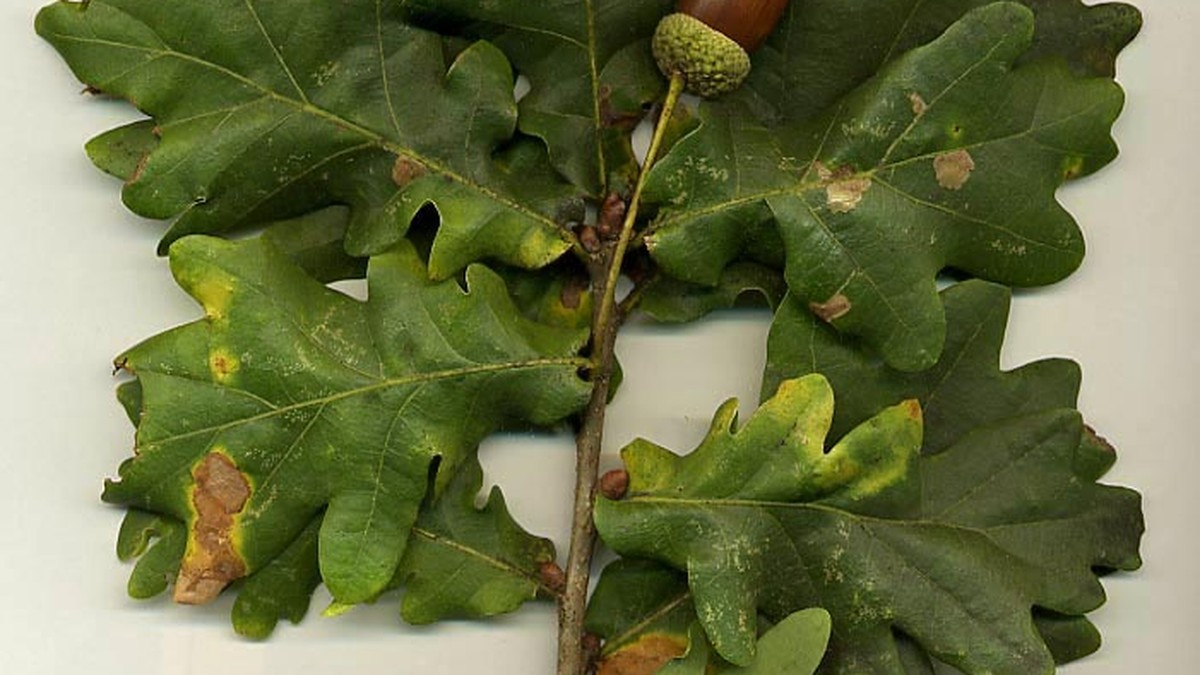
For the shipwrights of Western Europe—most notably the Royal Navy dockyards at Portsmouth, Plymouth, Chatham, and Deptford—the supreme material of naval construction was English White Oak (Quercus robur and Quercus petraea). Grown in the rich, heavy clay soils of the Weald of Sussex, Hampshire, and the Royal Forest of Dean, English oak possessed physical characteristics that made it the gold standard of hull framing.
English oak is a dense hardwood with a specific gravity of approximately 0.75 to 0.85 when seasoned. Its internal cellular architecture consists of tight, interlocking radial fibers packed with heavy deposits of natural tannic acid (tannins). These tannins act as an organic biological preservative, rendering the heartwood exceptionally resistant to fungal dry rot and insect infestation. Furthermore, English oak is remarkably resistant to shear stress along its grain; when struck by heavy iron cannonballs, it compresses elastically rather than shattering into deadly cloud splinters.
The Colossal Forest Consumption of the Royal Navy
The scale of forest destruction required to maintain a major naval battle fleet was staggering. Building a standard 74-gun third-rate ship of the line—the workhorse of the Napoleonic Wars—required approximately 3,000 mature oak trees, representing roughly 4,000 loads of timber (one load equaling 50 cubic feet of squared timber). Because an oak tree takes 100 to 150 years to attain the girth necessary for first-rate naval frames, constructing a single fleet of forty ships of the line consumed the equivalent of 4,000 acres of ancient, unmanaged primeval woodland.
| Timber Species | Primary Geographic Source | Specific Gravity & Density | Optimal Structural Application | Mechanical Property / Advantage |
|---|---|---|---|---|
| English White Oak (Quercus robur) | Southern England (Weald / New Forest) | 0.75–0.85 (48–55 lbs/ft³) | Lower hull frames, stem posts, keelson | High tannic acid content; exceptional split resistance |
| Southern Live Oak (Quercus virginiana) | Coastal Georgia & Carolinas (USA) | 0.95–1.05 (60–70 lbs/ft³) | Frigate framing, knees, and futtocks | Dense interlocking grain; virtually impervious to cannonball strike |
| Scots Pine (Pinus sylvestris) | Baltic (Riga, Danzig, Memel) | 0.50–0.55 (32–36 lbs/ft³) | Lower masts, topmasts, bowsprits | High elasticity modulus; flexes under wind gale without fracture |
| Larch / Douglas Fir | Pacific Northwest / Central Europe | 0.55–0.60 (35–38 lbs/ft³) | Deck planking, yards, and booms | Straight, knot-free grain; excellent weather durability |
| American Elm (Ulmus americana) | North American river floodplains | 0.60–0.68 (38–44 lbs/ft³) | Keels, garboard strakes, underwater planking | Complete rot immunity when permanently submerged in water |
| Lignum Vitae (Guaiacum officinale) | Caribbean & Central America | 1.20–1.35 (75–85 lbs/ft³) | Deadeyes, pulley sheave blocks, stern bearings | Extreme hardness; self-lubricating natural guaiac resin |
2. Compass Timbers: The Organic Curves of the Hull
One of the most profound misconceptions regarding historic wooden shipbuilding is the belief that curved frames were bent into shape by steam or fire. While thin hull planks were heated in steam chests to bend around the bow and stern, the massive, structural load-bearing frames—measuring up to sixteen inches in thickness—could never be bent artificially without rupturing their internal wood fibers, inducing fatal structural weakness.
Instead, shipwrights relied exclusively upon compass timbers (also known as ‘knees’ or ‘grown timbers’)—wood harvested from trees that had grown naturally into curves, crooks, and right-angled bends. Trees growing in open hedgerows or exposed coastal clifftops, battered by prevailing sea winds, naturally developed curving boughs and twisted trunks with an unbroken, continuous longitudinal grain following the exact contour of the curve.
The Search for the Perfect Naval Knee
Shipwrights traveled directly into the royal forests with wooden or paper templates (molds) taken from the ship’s drafting loft, searching for specific tree geometries:
- Stem and Stern Knots: Giant oak trunks with a natural 60- to 70-degree curve to form the massive forward stem post that carved through ocean waves.
- Hanging and Lodging Knees: Right-angled junctions where heavy lateral branches joined the main trunk, providing the internal structural L-brackets that bolted the horizontal deck beams to the vertical hull ribs.
- Floor Timbers (V-shaped crotches): The bifurcated base of an oak tree where the main trunk split into two major branches, forming the sharp deadrise at the ship’s bow and stern.
Because compass timbers were exceptionally rare—often requiring the search of twenty or thirty square miles of woodland to locate a single pair of matching hanging knees—they commanded exorbitant market prices, driving bitter legal battles between royal naval surveyors and private agricultural landowners.
3. The Masting Crisis and the Baltic Timber Trade
While Western Europe produced prime oak for hulls, it lacked the colossal, straight softwood conifers required for ship masting. A first-rate ship of the line required a mainmast towering over 200 feet above the water, with a base diameter exceeding three feet (nearly one meter). The mast had to possess extraordinary tensile elasticity to withstand the immense bending moments exerted by thousands of square yards of wind-filled canvas during Atlantic gales.
The savior of European sailing navies was the Baltic timber trade, centered upon the old-growth boreal forests of Russia, Poland, and Scandinavia, exported through the Hanseatic ports of Riga, Danzig, Memel, and St. Petersburg. The prize of this trade was the Scots Pine (Pinus sylvestris), known in naval commerce as ‘Riga Fir’. Growing slowly in sub-arctic continental climates with short growing seasons, these trees grew perfectly straight, dense, and knot-free, packed with natural preservative pitch.
The King’s Broad Arrow and the American White Pine
To reduce dependence on Baltic timber (which could be blockaded by hostile Danish or Russian fleets closing the Danish Sound), the British Crown turned to the vast old-growth forests of North America, particularly New Hampshire and Maine. Here grew the colossal Eastern White Pine (Pinus strobus), trees reaching heights of over 200 feet with base diameters of six feet.
Under the British Mast Acts of the early eighteenth century, Crown surveyors marked every white pine measuring 24 inches or more in diameter with the King’s Broad Arrow—a three-pronged hatchet mark declaring the tree the sovereign property of the Royal Navy. Colonists caught felling Broad Arrow pines were subjected to severe fines and property forfeiture. This tyrannical forestry overreach ignited fierce colonial resistance (the ‘Pine Tree Riot’ of 1772 in New Hampshire), directly fueling the revolutionary sentiments that sparked the American Revolutionary War.
⚓ Dendrological Technology: Made Masts
When single trees of sufficient girth could not be found to form the lower masts of giant ships of the line, shipwrights invented the ‘made mast’. A made mast was a composite structural cylinder constructed from four, six, or eight interlocking pine baulks scarphed and coaked together, bound tightly with red-hot iron hoops (mast hoops) that contracted as they cooled, creating a flexible, composite spar stronger than any single solid tree.
4. The Science of Timber Seasoning and Dry Rot Prevention
Felling the perfect oak was only the beginning of naval construction; the raw timber had to be painstakingly seasoned. Freshly felled ‘green’ timber contains up to 50% water by weight within its cell cavities and walls. If green timber was built into an unventilated ship’s hold, the remaining sap fermented, providing the perfect breeding ground for wood-destroying basidiomycete fungi, most notably dry rot (Serpula lacrymans).
Dry rot was a far deadlier enemy to wooden navies than enemy artillery. The fungal mycelium digested the cellulose within the wood cells, leaving behind a brittle, crumbly brown mass of cubical charcoal-like fragments. Entire warships, built in haste during wartime with unseasoned oak, rotted into unseaworthy hulks in as little as three to five years without ever firing a broadside.
Natural Air Drying and Wet Storage
Proper seasoning required natural air drying under covered sheds for a minimum of two to three years. The timber was stacked on dry gravel foundations with wooden stickers between the logs to ensure continuous cross-ventilation, slowly reducing moisture content to approximately 15%.
Alternatively, shipyards utilized water seasoning. Logs were completely submerged in saltwater timber ponds or tidal estuaries for six months to a year. The water flushed out the organic sap, sugars, and starches that fungi feed upon. When subsequently hauled ashore, the waterlogged timber dried significantly faster and remained immune to internal fermentation.
5. The Ecological Exhaustion of the Age of Sail
By the midpoint of the nineteenth century, the insatiable timber demands of global sailing fleets had triggered a continental ecological crisis. Prime oak forests across Western Europe were completely exhausted. Shipwrights were forced to scour the globe for tropical substitutes, turning to Burmese teak (Tectona grandis), an exceptional hardwood filled with natural silica and rubber-like oils that preserved iron bolts from rust, and Australian mahogany.
This ecological bottleneck made the industrial transition to iron and steel hulls inevitable. When the British Admiralty launched the revolutionary iron-hulled frigate HMS Warrior in 1860, it was not merely celebrating the triumph of the steam engine and rolled iron armor plate; it was acknowledging that the ancient forests of Europe could no longer supply the timber required to maintain an oceanic empire.
The surviving masterpieces of wooden naval architecture—from the English oak timbers of HMS Victory to the live-oak frames of USS Constitution—stand today as silent botanical monuments to the profound, intimate alliance between human engineering and the living forest.
6. Dendrochronology and Forensic Forest Ecology in Naval Archaeology
The modern study of historic shipbuilding timber has been revolutionized by dendrochronology—the scientific analysis of annual tree-ring growth patterns. Because climate variations (temperature, rainfall, drought) affect all trees across a geographic region simultaneously, trees record a unique climatic fingerprint in their growth rings year by year.
By extracting microscopic core samples from the surviving hull timbers of historic shipwrecks—such as the Mary Rose, the Vasa, and the Newport Medieval Ship—naval archaeologists can compare the timber ring patterns against international master tree-ring chronologies spanning thousands of years. This allows scientists to determine not merely the decade a warship was built, but the exact year and season the individual trees were felled, and trace the wood back to the specific forest valley where it grew, revealing ancient timber trading routes across medieval and early modern Europe.
| Archaeological Shipwreck | Primary Timber Species | Dendrochronological Felling Date | Geographic Forest Provenance | Archaeological Discovery |
|---|---|---|---|---|
| The Mary Rose (1511) | English White Oak (Quercus robur) | Winter 1509 / Spring 1510 | New Forest & Weald of Kent (England) | Proved ship was built entirely of native royal oak |
| The Vasa (1628) | Swedish Oak (Quercus robur) | Autumn 1626 / Winter 1627 | Småland & Södermanland (Sweden) | Confirmed rapid, green-timber wartime construction |
| Newport Ship (c. 1468) | Basque / Iberian Oak & Pine | Circa 1458–1467 | Basque Country (Northern Spain) | Revealed thriving Anglo-Iberian 15th-century wine trade |
7. Chemical Interactions of Oak Tannins and Saltwater Preservation
The exceptional longevity of white oak in maritime environments is directly linked to the chemical behavior of its natural polyphenolic compounds. English white oak contains between 6% and 10% natural tannic acid by dry weight. When submerged in marine environments, these tannins react with calcium and magnesium ions present in seawater to form insoluble organometallic complexes that harden within the microscopic cell lumens.
This natural chemical petrification process significantly retards the enzymatic degradation caused by marine soft-rot fungi. Furthermore, when oak timbers are fitted with copper or bronze fasteners rather than iron spikes, the wood surrounding the fastener remains free of corrosive iron staining (wood sickness), allowing ship frames to maintain their structural elasticity and load-bearing integrity over decades of continuous global voyaging.